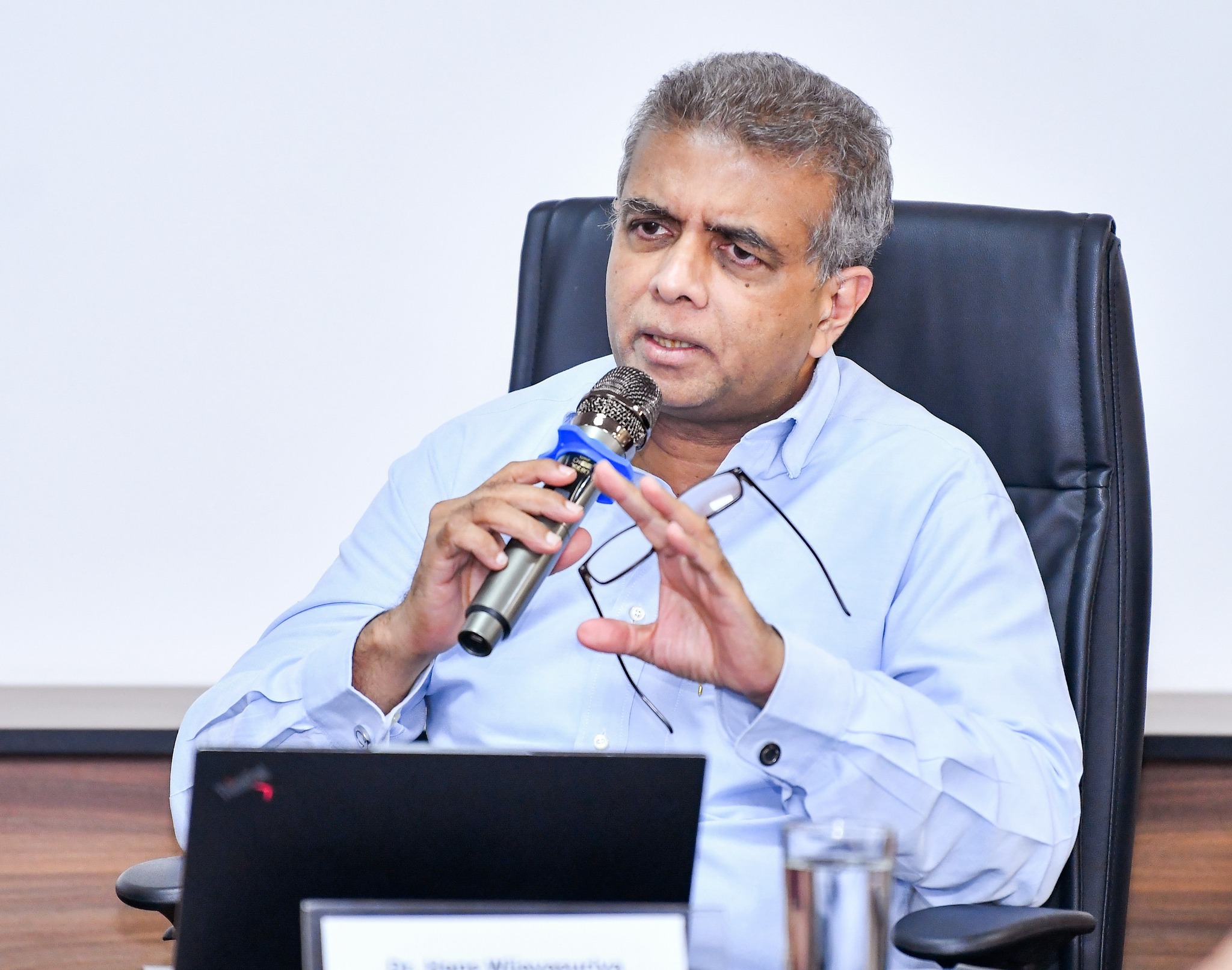
The 2nd Meeting of the VASP Sub-Committee was recently held successfully, bringing together key stakeholders to present and discuss observations on the draft concept paper for Sri Lanka’s Virtual Asset Service Providers (VASP) regulatory framework.
The session was chaired by Hon. Deputy Minister of Digital Economy Eng. Eranga Weeraratne, alongside Dr. Hans Wijayasuriya, Mr. Waruna Sri Dhanapala, and Dr. Subhani Keerthirathne, Director of the Financial Intelligence Unit (CBSL). A total of 28 members actively participated, sharing valuable insights and recommendations to further strengthen the concept paper initially presented at the previous session.
Following the discussions, the Committee agreed to work towards a consolidated paper, capturing the key observations and recommendations presented during the session.
The Hon. Deputy Minister also invited the Securities and Exchange Commission (SEC) and the Ministry of Digital Economy (MoDE) to work collaboratively in reviewing regulatory frameworks adopted by other jurisdictions, and to present their findings at the next meeting scheduled for April. In addition, the SEC was requested to outline potential challenges it may encounter in its role as the regulator, to support a more practical and effective implementation approach.
This meeting builds on the milestone presentation made on 12th February, where the Hon. Deputy Minister presented the proposed VASP Regulatory Framework to the main CFT Committee of the Central Bank of Sri Lanka (CBSL/FIU), marking a significant step in strengthening Sri Lanka’s AML/CFT regime in line with international standards.
The proposed framework reflects a collaborative, multi-stakeholder effort, incorporating expertise from both public and private sectors. Key highlights include:
- Recommendations of the Multi-Stakeholder VASP Regulatory Committee
- Findings from the national risk assessment on money laundering and terrorist financing risks in the virtual asset sector
- A phased implementation roadmap through 2026/2027
- Proposed compliance measures including registration, KYC/AML obligations, and reporting standards